₹5,500$70
/ month
Any open seat, month to month. Best for 3–4 days a week.
Book a Visit →

Desks, cabins and meeting rooms at NX One — one monthly bill, one month's notice, and no surprise maintenance charges.
For years the answer was that you did not — you commuted to Sector 62, Sector 63 or across to Gurgaon, and lost two hours a day doing it.
That has changed faster than most people realise. Greater Noida West now houses lakhs of residents across Gaur City, Bisrakh, Ek Murti and the surrounding sectors, and a growing share of them work for companies headquartered somewhere else entirely. Remote employees, consultants, founders running early-stage businesses — all of whom need somewhere to work that is not a bedroom or a coffee shop.
What was missing was decent commercial space to match. Techzone 4 is where that gap is closing, and NX One is the part of it that is already built and running rather than still under construction.

NX One is a 25-acre mixed-use development in Techzone 4 — offices, retail and food in one campus, GRIHA-precertified, centrally air conditioned, with multi-level parking and proper security.
The practical difference shows up in small things. Power cuts do not end your call. A client who visits sees a commercial building with a reception, not a housing society gate. There is parking that does not involve negotiating with a guard. The cafeteria means you are not ordering in every afternoon.
And there is the part nobody puts on a brochure — working alongside other people who are also building something. It sounds soft until you have spent six months working alone from a spare room.
Most shared offices in this belt still run on eleven-month agreements with multi-month deposits. We do not, because it defeats the purpose.
Hot desks suit consultants and remote employees who are in three or four days a week. Dedicated desks are for people who want their own setup and storage they do not pack up each evening. Private cabins start at two seats and scale as you hire — useful when you cannot predict whether you will be four people or nine by March.
One month's notice either way. Change your plan mid-engagement without renegotiating anything. Everything — electricity, internet, housekeeping, pantry — is in the one figure you were quoted.
One monthly figure. No separate electricity, maintenance or internet bills afterwards.
All figures include electricity, internet, housekeeping and pantry. GST extra.
Day passes available at ₹399. Meeting rooms bookable by the hour beyond your included credits.
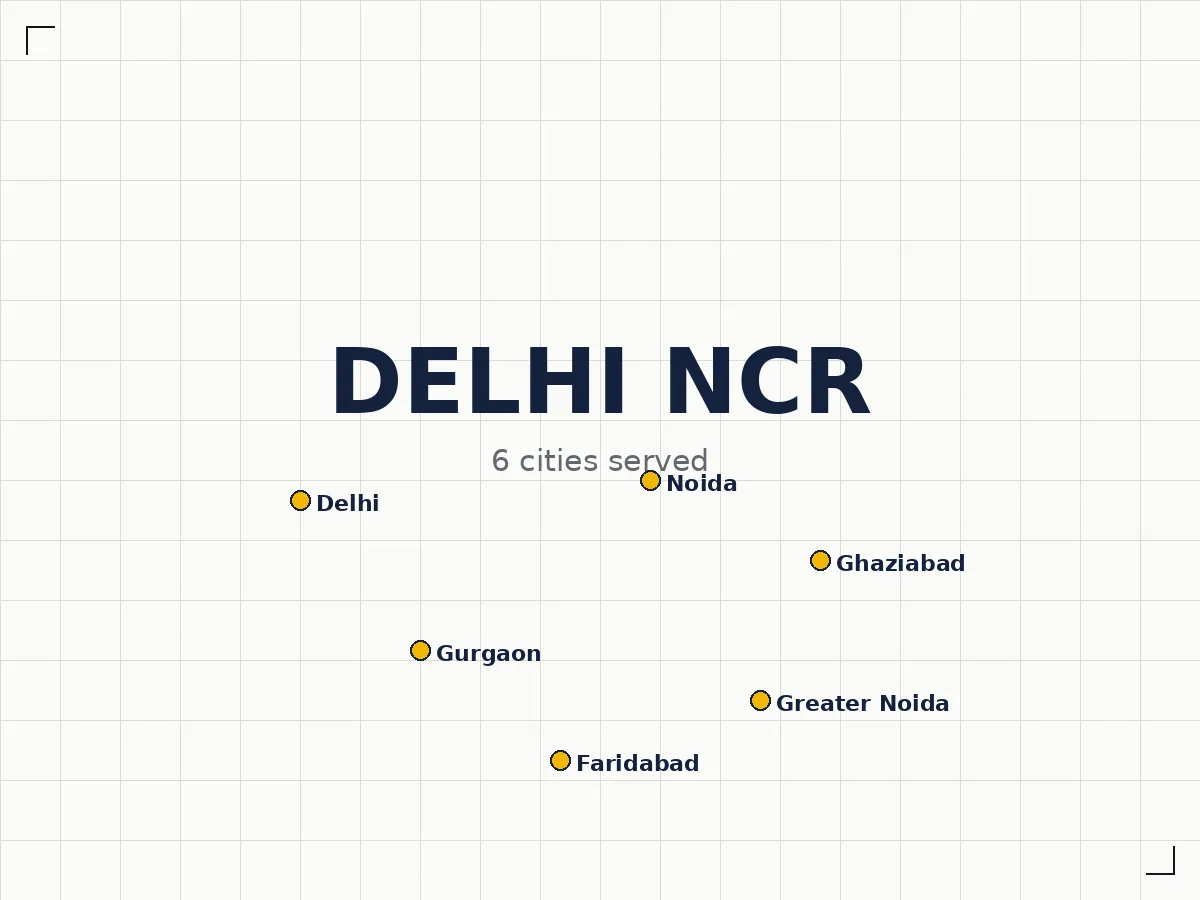
NX One, Techzone 4, Greater Noida West — just off the main Noida Extension road, close to the FNG corridor.
Gaur City, Ek Murti Chowk and Bisrakh are minutes away. Sector 62 and the Noida IT belt run about 25–30 minutes depending on traffic. Ghaziabad and Indirapuram are reachable through the FNG without entering Noida proper — which matters more than people expect at 6pm.
Hot desks start at ₹5,500 a month, dedicated desks at ₹7,500, and private cabins from ₹12,000 for a two-seater. Everything is included — electricity, high-speed internet, housekeeping, pantry, and meeting-room credits. There are no separate maintenance or electricity bills arriving later, which is where most shared-office quotes quietly expand.
One month. We do not ask for eleven-month commitments or six-month security deposits, because the whole point of a shared office is flexibility. If your team grows or shrinks, you should be able to change your plan the same month rather than negotiate an exit.
Yes. We provide GST and company registration support at the NX One address, including the NOC and utility documentation registrars ask for. This is a common reason startups take a desk here — a Techzone 4 commercial address carries more weight with clients and banks than a residential one.
NX One sits in Techzone 4, just off the main Noida Extension road and close to the FNG corridor. Gaur City, Ek Murti Chowk and Bisrakh are within a few minutes. Sector 62 and the Noida IT belt are a 25–30 minute drive. The proposed metro extension will improve this further, though we would not plan around a date for it yet.
Yes — conference rooms with screens and video-call setups, bookable by the hour. Members get monthly credits included in their plan; extra hours are charged separately. Day passes are available if you only need a professional space occasionally rather than a permanent desk.
A mix — early-stage startups, independent consultants, remote employees of Delhi and Gurgaon companies, small agency teams, and a few sales teams who need a base closer to Greater Noida West than to their head office. It stays deliberately mixed rather than filling up with a single large tenant.
Walk in for a day pass, or book a slot and we will show you around. No pressure to sign anything on the visit.
Get Your Free Audit →Six stages, in this order. We do not skip ahead because a client is impatient — the sequence exists because each stage depends on the one before it.
Everything currently running is reviewed together — search, paid, social, website, follow-up. Channels are almost never failing independently; the gaps between them are usually where the money leaks.
A single plan covering every active channel with a stated role for each. Without it, channels compete for the same budget while claiming credit for the same enquiries.
Keyword and audience research done once and used by every channel. Paying two agencies to research the same business twice is the most common hidden cost of a split setup.
Paid launches first because it produces data fastest. Organic and content build underneath it. Social runs alongside to make both cheaper. Turning everything on at once makes attribution impossible.
Landing pages, forms, tracking and CRM routing. Sending more traffic to a site that does not convert is an expensive way to discover the site does not convert.
Consolidated monthly reporting that leads with enquiries and cost per enquiry, with channel detail underneath for anyone who wants it.
Every one of these comes from an account or a site we have actually inherited. None of them are hypothetical.
Each optimises their slice, nobody owns the gaps, and research gets paid for twice. The gaps between channels are where enquiries leak.
Simultaneous launch across five channels makes attribution impossible. Sequenced rollout tells you what actually worked.
Social rarely closes the sale directly; it makes search and paid cheaper. Measured alone it looks like failure, measured in context it often subsidises everything else.
More traffic to a site that does not convert is an expensive way to confirm the site does not convert. Fix the destination before increasing volume.
Compounding channels need at least two quarters to show their shape. Agencies overhauling the plan every reporting cycle are usually managing anxiety, not performance.
Ask these of us and of everyone else you are considering anywhere. The answers separate agencies faster than any proposal does.
If an answer is vague, that is the answer. Vagueness at the sales stage becomes vagueness in reporting.
Honest timelines, based on engagements we have actually run rather than what sounds persuasive in a pitch.
Audit, fixes and setup. Little visible movement. This is the stage clients find hardest, and skipping it is why most engagements underperform later.
Early movement on long-tail terms, campaigns stabilising, first attributable enquiries. Enough data to know what is working and what is not.
Commercial keywords move, cost per enquiry falls as the account matures, and content published earlier starts ranking. This is where the work pays back.
By now the numbers are clear. Either we scale what works, or we tell you honestly that the channel is not right for your business.
Agencies hide behind jargon. Here is what the words actually mean, so you can hold any vendor to account — including us.
Assigning credit for an enquiry across the channels that touched it. Last-click flatters paid and undervalues everything upstream.
Customer acquisition cost — total spend divided by customers won. The number that decides whether marketing is working.
Covering awareness, consideration and decision rather than only the final click.
The combined tools running your marketing. Fragmented stacks lose data at every handoff.
Whether a channel produced sales that would not have happened anyway. Rarely measured, frequently assumed.
That is usually what we recommend. Two channels, then expand once there is data showing where the next rupee performs best. Buying everything on day one is rarely the efficient move.
The research and reporting layer is shared instead of repeated. Combined engagements typically land 20–30% below the sum of the same services bought individually.
One account strategist who owns the whole engagement. You do not brief a different person per channel.
Monthly rolling after an initial three-month period, which exists because compounding channels need a fair run to show anything. No annual lock-in.
We tell you, with numbers, and either change approach or recommend you stop. An agency that never delivers bad news is not reporting honestly.