
Let's talk about your growth
Tell us a bit about your business and goals. We'll get back to you within 24 hours with next steps.
Where we work
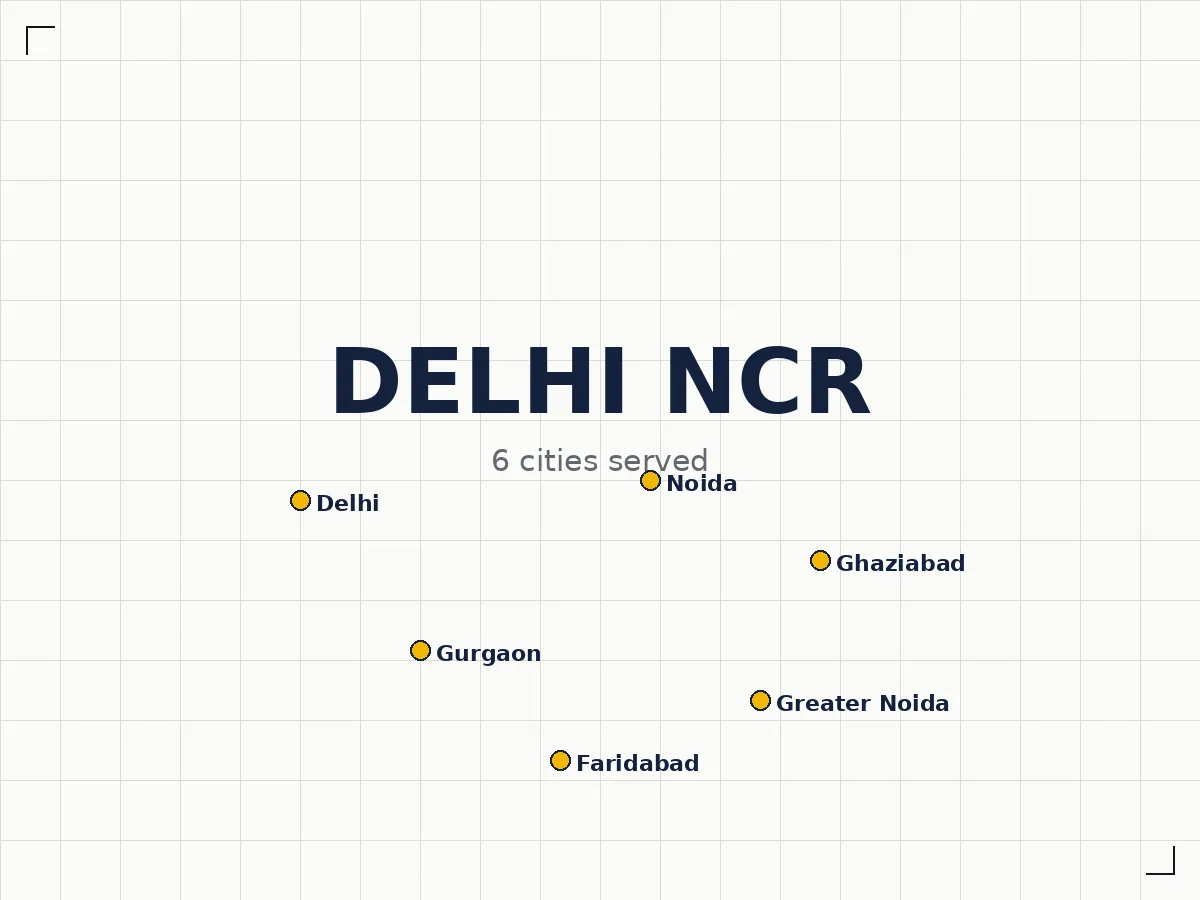
We serve businesses across Delhi NCR — Noida, Greater Noida, Delhi, Gurgaon, Faridabad and Ghaziabad — and work with international clients remotely.
Request a Free Audit
hello@get365digital.com
Phone
+91 79825 40118
+91 74510 05142
Location
Noida, Uttar Pradesh, India
Google Business Profile
Coming soon — GMB listing in progress.
More from 365 Digital
Related services, locations and resources across the site.
Coworking space at NX One
Visit us in Techzone 4, Greater Noida West.
WhatsApp Marketing Service
Compliant broadcast campaigns and automation.
Bulk SMS Service
DLT-registered transactional and promotional SMS.
IVR Calling Service
Automated voice campaigns and cloud telephony.
CRM Setup & Management
Capture every enquiry and automate follow-up.
Digital Marketing Agency in Noida
Full service offering for our home market.
Digital Marketing Agency in Delhi
Every service, tailored to the Delhi market.
Digital Marketing Agency in Gurgaon
Corporate and premium-brand campaigns.
Digital Marketing Agency in Faridabad
Low-competition wins for industrial businesses.
Digital Marketing Agency in Ghaziabad
Local SEO and review strategy for dense localities.
Digital Marketing Agency in Greater Noida
Early-mover visibility in a fast-growing market.
Official sources and documentation
We work to published platform and regulatory guidance rather than second-hand advice. These are the primary sources behind our process.
- Google Business Profile Help ↗
- Google Maps ↗
- Udyam (MSME) Registration — Government of India ↗
- Ministry of MSME, Government of India ↗
- Google Search Central — SEO Starter Guide ↗
- Google Ads Help — campaign types ↗
- Meta Business Help Centre ↗
- WhatsApp Business Platform ↗
- TRAI — Telecom Regulatory Authority of India ↗
- Invest India — national investment portal ↗
How an engagement runs
Six stages, in this order. We do not skip ahead because a client is impatient — the sequence exists because each stage depends on the one before it.
Discovery and audit
Everything currently running is reviewed together — search, paid, social, website, follow-up. Channels are almost never failing independently; the gaps between them are usually where the money leaks.
One strategy document
A single plan covering every active channel with a stated role for each. Without it, channels compete for the same budget while claiming credit for the same enquiries.
Shared research layer
Keyword and audience research done once and used by every channel. Paying two agencies to research the same business twice is the most common hidden cost of a split setup.
Sequenced rollout
Paid launches first because it produces data fastest. Organic and content build underneath it. Social runs alongside to make both cheaper. Turning everything on at once makes attribution impossible.
Conversion infrastructure
Landing pages, forms, tracking and CRM routing. Sending more traffic to a site that does not convert is an expensive way to discover the site does not convert.
One report, one call
Consolidated monthly reporting that leads with enquiries and cost per enquiry, with channel detail underneath for anyone who wants it.
The mistakes we see most often
Every one of these comes from an account or a site we have actually inherited. None of them are hypothetical.
Splitting channels across vendors
Each optimises their slice, nobody owns the gaps, and research gets paid for twice. The gaps between channels are where enquiries leak.
Turning everything on at once
Simultaneous launch across five channels makes attribution impossible. Sequenced rollout tells you what actually worked.
Judging channels in isolation
Social rarely closes the sale directly; it makes search and paid cheaper. Measured alone it looks like failure, measured in context it often subsidises everything else.
No conversion infrastructure
More traffic to a site that does not convert is an expensive way to confirm the site does not convert. Fix the destination before increasing volume.
Changing strategy every month
Compounding channels need at least two quarters to show their shape. Agencies overhauling the plan every reporting cycle are usually managing anxiety, not performance.
Questions worth asking
Ask these of us and of everyone else you are considering anywhere. The answers separate agencies faster than any proposal does.
If an answer is vague, that is the answer. Vagueness at the sales stage becomes vagueness in reporting.
- — Who owns the accounts, domain and data if we leave?
- — What exactly is delivered each month, in writing?
- — Do you mark up ad spend or media cost?
- — Who actually does the work, and where do they sit?
- — What is the notice period, and what happens on exit?
- — Can I speak to a client you stopped working with?
- — What would make you tell me to stop spending?
What results realistically look like
Honest timelines, based on engagements we have actually run rather than what sounds persuasive in a pitch.
Foundation
Audit, fixes and setup. Little visible movement. This is the stage clients find hardest, and skipping it is why most engagements underperform later.
First signals
Early movement on long-tail terms, campaigns stabilising, first attributable enquiries. Enough data to know what is working and what is not.
Compounding
Commercial keywords move, cost per enquiry falls as the account matures, and content published earlier starts ranking. This is where the work pays back.
Scale or stop
By now the numbers are clear. Either we scale what works, or we tell you honestly that the channel is not right for your business.
Terms you will hear, explained
Agencies hide behind jargon. Here is what the words actually mean, so you can hold any vendor to account — including us.
Attribution
Assigning credit for an enquiry across the channels that touched it. Last-click flatters paid and undervalues everything upstream.
CAC
Customer acquisition cost — total spend divided by customers won. The number that decides whether marketing is working.
Full funnel
Covering awareness, consideration and decision rather than only the final click.
Marketing stack
The combined tools running your marketing. Fragmented stacks lose data at every handoff.
Incrementality
Whether a channel produced sales that would not have happened anyway. Rarely measured, frequently assumed.
Things clients ask before signing
Can we start with one channel and expand?
That is usually what we recommend. Two channels, then expand once there is data showing where the next rupee performs best. Buying everything on day one is rarely the efficient move.
How is this cheaper than separate vendors?
The research and reporting layer is shared instead of repeated. Combined engagements typically land 20–30% below the sum of the same services bought individually.
Who is our point of contact?
One account strategist who owns the whole engagement. You do not brief a different person per channel.
What contract length?
Monthly rolling after an initial three-month period, which exists because compounding channels need a fair run to show anything. No annual lock-in.
What if it is not working?
We tell you, with numbers, and either change approach or recommend you stop. An agency that never delivers bad news is not reporting honestly.